
24/7 EMERGENCY +1 985 781 0804
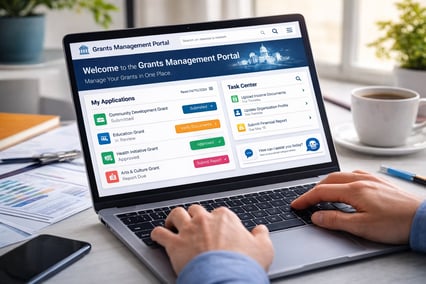 Tennessee has transformed how residents access public benefits by replacing fragmented systems with a single, one-stop benefits portal. The portal allows users to apply for multiple programs, track their status through centralized dashboards, and receive AI enabled support through chatbots and streamlined call centers.
We know breaking down silos and building collaboration creates work efficiencies and cost savings. Grantmaking organizations face many of the same challenges Tennessee confronted with its benefits programs:
A unified, customer centric portal, paired with AI-driven support, could transform the grant experience for applicants and organization administrators:
Witt O’Brien’s partners with government organizations nationwide to successfully implement grant management technology systems to ensure it delivers real, lasting value. We support the full lifecycle of implementation—from requirements definition and system selection to configuration, data migration, and post go-live stabilization—always grounded in federal grant compliance and operational best practices.
Want to learn more on grants system technology and data infrastructure? Download our State Roadmap, and schedule a free consultation with our grants readiness team.
Recent court action and proposed SAM.gov certification changes significantly increase compliance and liability risks for federal grant recipients. Organizations should reassess DEI-related activities, documentation, and legal exposure now to avoid costly missteps.
Do not get a false sense of security, in the case of National Association of Diversity Officers in Higher Education ("NADOHE") v. Trump, this court decision may have gotten a little lost with everything else going on at the federal level, but with the proposed SAM.gov certification updates on Information Collection and SAM registration requirements for Financial Assistance Recipients, it now makes sense. Both the court decision and the proposed SAM.gov updates substantially heighten compliance obligations and risk exposure for federal financial assistance (grant) recipients. You need to:
Question son how to stay compliant? Contact us for a free consultation.
Federal financial assistance to cities and states could soon hinge on one question: whether local governments are cooperating with federal immigration enforcement.
Two legislative fronts are converging to make that a reality. In the House, the Shut Down Sanctuary Policies Act would restrict federal law-enforcement funds and grants to jurisdictions that do not aid federal immigration enforcement and reallocate them to those that do. In the Senate, Budget Chairman Lindsey Graham has proposed making it a crime for local officials to release migrants who received a federal detention request, with penalties escalating if a released migrant later caused harm.
The stakes for grant-dependent organizations are real. Opponents warn that many targeted grants benefit entire communities, meaning jurisdictions could lose funding across programs like school nutrition, transportation, and public health.
For grant administrators and local government finance officers, the takeaway is straightforward: conditions attached to federal assistance are likely to grow more complex. Organizations relying on federal grants, particularly in public safety, housing, and community development, should closely monitor which programs may be affected as this legislation advances.
Federal agencies now have a sharper tool for pursuing fraud in grant programs, and organizations receiving federal financial assistance should take notice.
The Administrative False Claims Act (AFCA), enacted in December 2024 as part of the FY2025 National Defense Authorization Act, revamps an older and largely dormant law. The most consequential update is a dramatic expansion of enforcement reach: the maximum recoverable amount through an administrative case has increased from $150,000 to $1 million. That change transforms the AFCA from a rarely used technicality into a credible enforcement mechanism.
Unlike the better-known False Claims Act, the AFCA allows agencies to investigate and resolve smaller fraud cases internally and impose civil penalties, damages, and assessments without court intervention. Grant-related submissions are squarely within scope, and the intent standard is broad — the government does not need to show specific intent to defraud; actual or constructive knowledge of falsity is sufficient. Negligent misrepresentations in grant applications, progress reports, or financial statements could be enough to trigger liability.
Organizations can lower their risks by enhancing internal compliance programs and emphasizing accurate documentation and reporting. For nonprofits, universities, healthcare providers, and other grant recipients, accuracy in all federal submissions has never been more important.
On March 16, 2026, President Trump signed an Executive Order establishing the Task Force to Eliminate Fraud, a government-wide initiative with direct implications for organizations receiving federal financial assistance.
The Task Force advises the President and coordinates government-wide efforts to combat fraud, waste, and abuse in federal benefit programs.
While the Task Force's public focus has been on entitlement programs, its mandate is broad. It will oversee stronger eligibility checks, introduce pre-payment controls, and establish baseline anti-fraud standards covering identity verification, documentation, risk management, and auditing. Grant recipients at all levels should expect heightened scrutiny of eligibility documentation, internal controls, and subrecipient monitoring.
Agencies must identify vulnerable transactions within 30 days, propose anti-fraud measures within 60 days, and submit implementation plans within 90 days, meaning new requirements could reach recipients quickly.
Now is the time to review internal controls and financial management systems, ensure participant eligibility documentation is current, confirm subrecipient monitoring meets federal standards, and watch for updated guidance from your awarding agency. Organizations with strong compliance practices are well-positioned, but vigilance is essential in this environment.
Are you equipped to manage the growing risk, responsibility, and scrutiny that now comes with Federal funding? Download our State Roadmap, and schedule a free consultation with our grants readiness team.


.jpeg "Subrecipient Capacity Building")