
24/7 EMERGENCY +1 985 781 0804
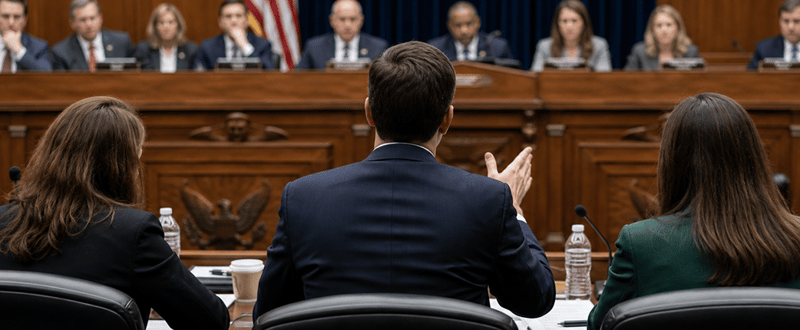
House committee advances 9 anti-fraud bills with mostly bipartisan support | Federal News Network
On April 29, the House Oversight and Government Reform Committee advanced nine bills with broad bipartisan support which could significantly change how federal dollars flow, and what is expected of the organizations that receive them. The package's central goal is to end the "pay-and-chase" model for recovering fraudulent payments, instead requiring federal agencies to conduct anti-fraud checks before money goes out the door. These bills must still pass both the House of Representatives and the Senate before becoming law, but organizations should monitor their developments to anticipate changes to federal award requirements.
Of the nine bills, the three to keep a watch on for recipients and subrecipients of federal funding are the (1) Timely and Accurate Benefits Act, (2) Government Audit and Accountability of Federally Funded State-Administered Programs Act, and (3) Federal Program Integrity and Fraud Prevention Act.
For states, the Timely and Accurate Benefits Act would grant access to the US Department of the Treasury’s Do Not Pay system and condition receipt of federal funds on maintaining plans for identity verification, financial eligibility checks, and payment validation, requirements that will likely flow downstream to local governments and nonprofit subrecipients. The Government Audit and Accountability of Federally Funded State-Administered Programs Act would create a recurring "High Risk List" that identifies federally funded, state-administered programs most vulnerable to fraud, potentially triggering heightened audits and scrutiny.
For nonprofits and contractors, the Federal Program Integrity and Fraud Prevention Act would impose an automatic three-year funding ban on individuals convicted of covered federal felonies, including fraud, theft, and false statements, and require that they be listed as excluded sources on SAM.gov.
These bills signal a lasting shift toward prevention-first oversight. Organizations should review internal controls, clean up SAM.gov registrations, conduct due diligence on staff in fiduciary roles, and treat fraud prevention as a documented operational practice rather than a compliance checkbox. Those managing federal funds responsibly have little to fear, and much to gain, as stronger oversight helps preserve the public trust that keeps these programs funded.

A growing body of evidence suggests that one of the most effective tools for connecting people with government-funded programs is not an app or a website, but a text message. Grant funders and their recipients should take note. This Route Fifty Report: Text campaigns can help states increase public benefit participation article digs into the State of Maryland’s compelling proof of concept. As part of a pilot program, the State explored how SMS text messages could impact cross-enrollment of benefit programs in the state. The results suggest that text message campaigns are an important lever that state agencies can utilize to increase enrollment across benefit programs and, ultimately, better serve families.
The State discovered that only 51% of SUN Bucks beneficiaries (families receiving summer grocery assistance) were also enrolled in the US Department of Agriculture’s Supplemental Nutrition Assistance Program (SNAP) in 2024, despite significant overlap in the two programs’ eligibility criteria. The text campaign increased SNAP enrollment by 2,700 households and unlocked an estimated $5.5 million in federal food assistance for eligible Maryland families. This is not new; in 2023, the US General Services Administration (GSA) partnered with a handful of states and nonprofit organizations to use the Notify.gov platform to help them send customized text messages about application deadlines, meeting reminders, fraud alerts, and other critical programmatic updates.
These pilots offer a practical playbook for your grant-making process. Below are just a few examples of how to use text messaging campaigns to increase engagement and participation in community programs:
Send deadline reminders starting with the application submission to the grant recipient's closeout reporting date. Most deadlines are not missed due to negligence; the information simply never reaches them. A well-timed text closes that gap cheaply.
Use texts for cross-referrals. Alert both non-awarded and awarded recipients about related funding opportunities, technical assistance, or complementary programs they may qualify for.
Establish credibility upfront. GSA found that some recipients were unsure whether the texts were from a trustworthy source. A simple "credibility message" that confirms the sending number and assures recipients that personal information will never be requested by text (addresses this directly).
As the federal government tightens oversight of federal grant dollars, proactive communication with applicants and recipients is not just good service; it is risk management. Organizations that keep grantees informed and on deadline will have stronger outcomes to report and fewer compliance gaps to explain. A text message costs pennies. A missed deadline could cost far more.

If you receive federal grants or administer federal programs, the Supreme Court's recent activity demands your attention, even if the cases in the headlines are about cell phone companies and the Federal Communications Commission (FCC).
Last month, the Supreme Court heard arguments in cases brought by AT&T and Verizon challenging over $100 million in FCC fines for alleged data privacy violations. The companies argue the agency's forfeiture process violates their Seventh Amendment right to a jury trial. The outcome could reshape how agencies across the federal government enforce compliance, including in grant programs. Basically, a federal agency cannot be the judge, jury, and executioner.
The FCC cases were built on the US Securities and Exchange Commission (SEC) v. Jarkesy (2024) decision, in which the Court ruled that the SEC could not use internal administrative judges to impose civil penalties without a jury trial. Dozens of agencies run similar internal adjudication structures. A broad ruling here could force enforcement actions into federal courts, which would be slower, costlier, and less predictable for everyone involved. During oral arguments, several justices signaled skepticism toward the companies' position, so the Supreme Court may rule narrowly. But even a narrow ruling adds to an already-growing body of law curtailing agency power.
This case is coming on the heels of the Supreme Court's June 2024 decision in Loper Bright Enterprises v. Raimondo, which overruled the forty-year-old doctrine of Chevron deference. Under Chevron, courts were required to defer to an agency's reasonable interpretation of ambiguous statutes. That deference gave agencies, including grant-making bodies, broad latitude to fill statutory gaps, issue compliance guidance, and interpret their own rules with the confidence that courts would back them up.
That is no longer the case. Courts now exercise independent judgment on what the law means. Agencies no longer get the benefit of the doubt. Regulations that were shielded by Chevron deference for decades are now litigation targets, and agency guidance documents carry less legal authority than grant recipients may have assumed.
The same legal forces reshaping agency enforcement are reshaping how agencies administer and oversee federal grants. Specifically:
Grant conditions that rely on agency interpretations of ambiguous statutes are now more legally contestable. If an agency has imposed requirements that go beyond what the statute clearly requires, that overreach is more challengeable today than it was two years ago.
Agency guidance, FAQs, program circulars, and policy memorandums are not the same as a binding regulation and should not be treated as one. Organizations need to understand the statutory basis for compliance requirements, not just what the agency says about them.
Enforcement proceedings that once ran through internal agency hearings may increasingly end up in federal court, making audit disputes and disallowed cost determinations more complex and expensive to navigate.
Federal grant recipients should review their grant agreements with an eye toward which conditions rest on agency interpretation rather than clear statutory authority. Engage your legal counsel or someone with administrative law experience. And watch for the Supreme Court's decision in the FCC cases, expected by the end of June 2026; it will be the next significant data point in an ongoing shift that is far from over
Two landmark federal initiatives, the Internal Revenue Service’s (IRS) new Whistleblower Alert program and the US Department of Justice’s (DOJ) Fraud Oversight through Careful Use of Statistics (FOCUS) data-mining initiative, together create an unprecedented oversight environment for organizations that receive federal grants.

The IRS recently launched a formal Whistleblower alerts webpage, dedicated to actively soliciting tips about the misuse, diversion, or fraudulent handling of federal grant funds by tax-exempt organizations, businesses, and individuals. The IRS Whistleblower Program is not new; since 2007, it has generated over $7 billion in collections and paid out more than $1.3 billion in awards, but this alert is a strategic escalation, publicly advertising which behaviors are now under active scrutiny.
The alert specifically targets:
False statements or misrepresentations in grant applications
Misuse or diversion of federal funds for personal use
Self-dealing or undisclosed conflicts of interest
Improper payments to insiders or related parties
Failure to perform required services or deliver promised outcomes
Falsified reporting to federal agencies
The financial incentive for informants is significant: whistleblowers who provide specific, credible, and timely information can earn 15–30% of the proceeds collected by the IRS.
Simultaneously, the Office of Public Affairs launched its own anti-fraud initiative, formalizing its relationship with “data miners,” companies, and analysts who scan publicly available government data for statistical fraud signals. Under FOCUS, data miners are invited to meet with the DOJ before filing qui tam complaints under the False Claims Act (FCA), with the DOJ prioritizing cases that demonstrate analytical rigor and regulatory familiarity.
The financial stakes are severe. FCA defendants face treble damages plus per claim penalties. In cybersecurity-related FCA enforcement alone, DOJ secured $6.8 billion in fiscal year 2025, the largest single-year total in program history, with settlement values up 233% over 2024.
These two programs approach the same target from opposite directions: the IRS relies on insiders with firsthand knowledge; the DOJ FOCUS Initiative relies on outside analysts detecting statistical anomalies. Together, they cover nearly the full spectrum of how grant fraud can be identified.
Organizations should act on four fronts:
Audit all active grants for accuracy of reporting, appropriateness of expenditures, and fulfillment of programmatic obligations, particularly indirect cost allocations and related-party payments.
Assess internal whistleblower risk by identifying personnel with access to financial systems and ensure a trusted internal reporting channel exists to intercept concerns before they reach the IRS.
Review your public data footprint on USASpending.gov and the Federal Audit Clearinghouse. Compare your organization’s metrics with those of peer recipients to identify statistical outliers.
Engage your legal counsel or engage one before any government contact. Voluntary self-disclosure may significantly reduce FCA exposure if compliance issues are identified.
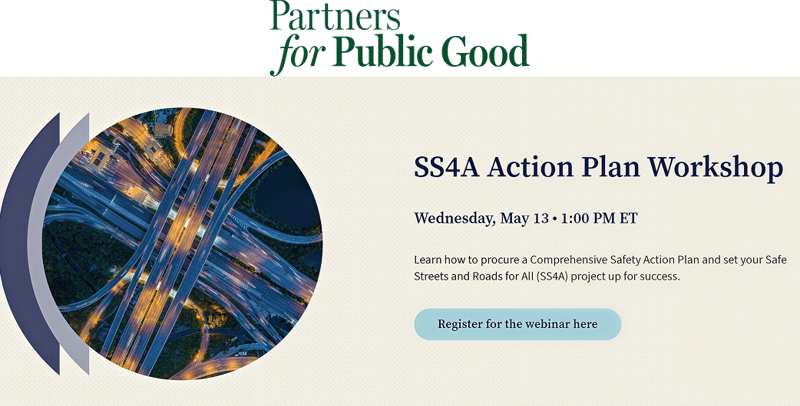
Has your city been awarded a Safe Streets and Roads for All (SS4A) planning grant? Are you looking to procure a consultant to develop a Comprehensive Safety Action Plan?
Partners for Public Good has developed a practical Request for Qualifications (RFQ) template designed for government leaders just like you. Partners for Public Good is hosting a short workshop on Wednesday, May 13th at 1pm ET to walk through how to use the template to improve road and pedestrian safety in your community.
Register for the workshop to gain priority access to the RFQ template and receive expert guidance on how to procure a consultant for your community. The workshop and template are completely FREE for government teams, thanks to Philanthropic Support.

.jpeg "Subrecipient Capacity Building")